TIS_Bollinger_Trender for TradingView
This indicator is available by subscription only. Subscribe on our TradingView page →Este indicador está disponible solo por suscripción. Suscribite desde nuestra página de TradingView →
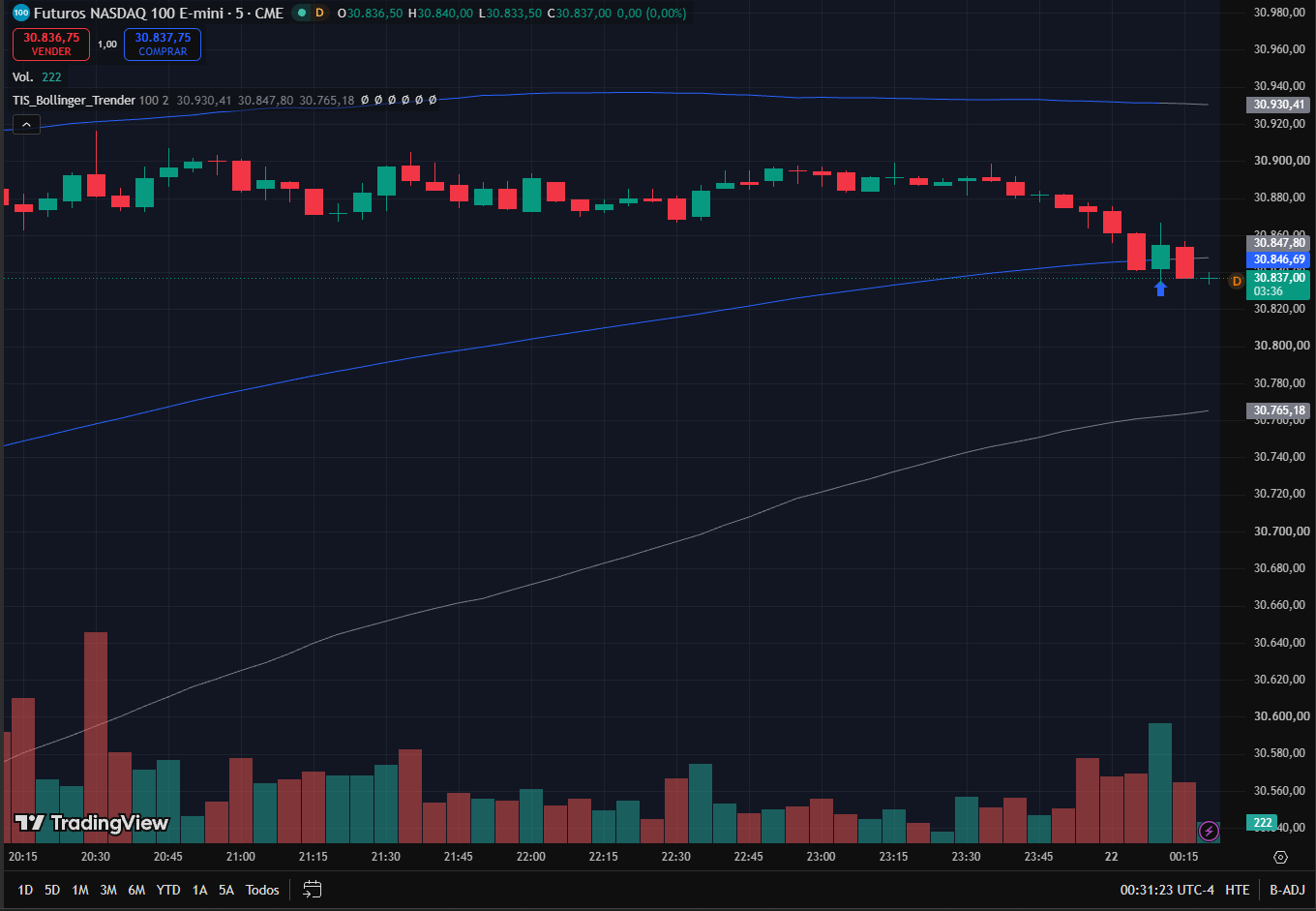
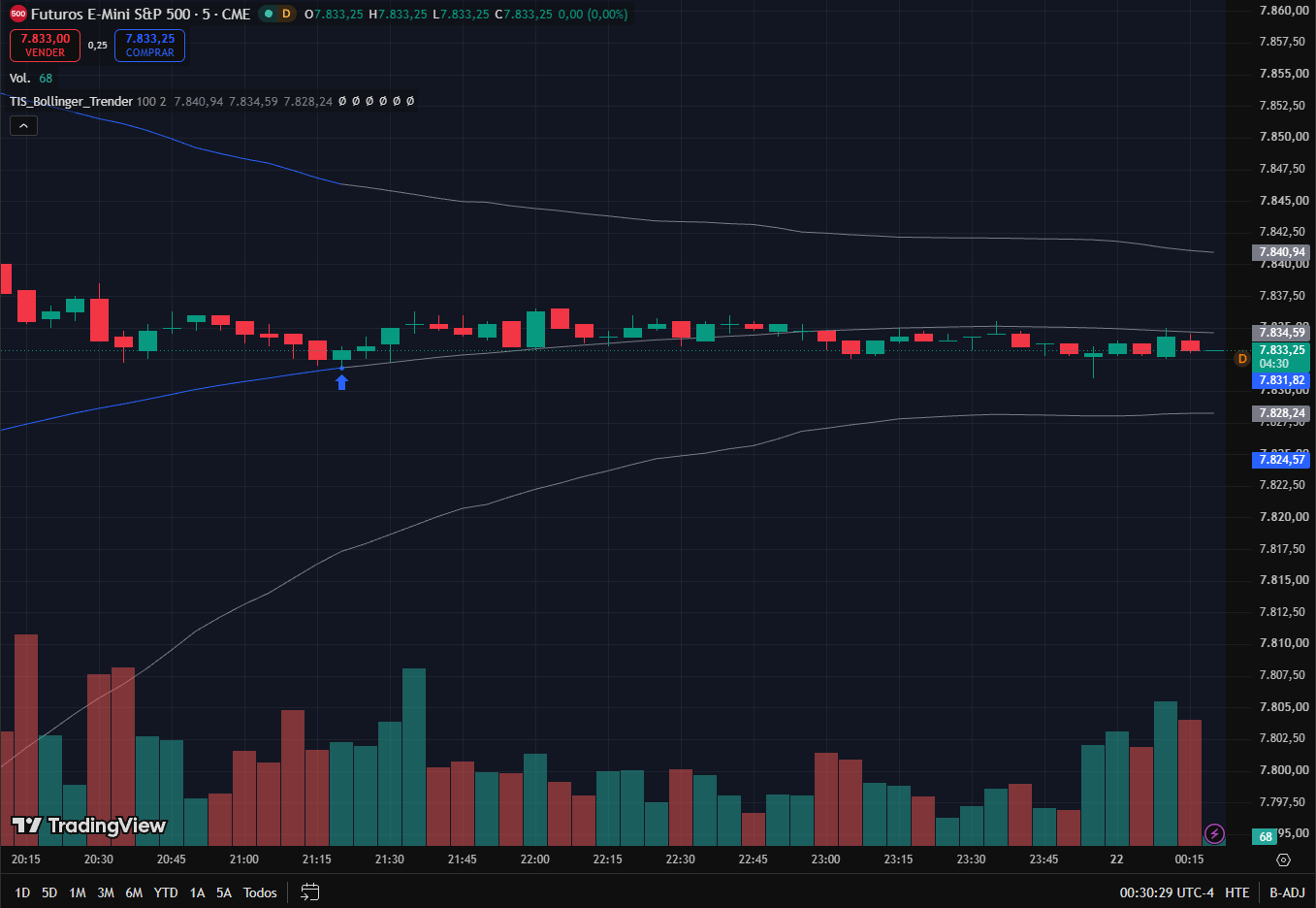
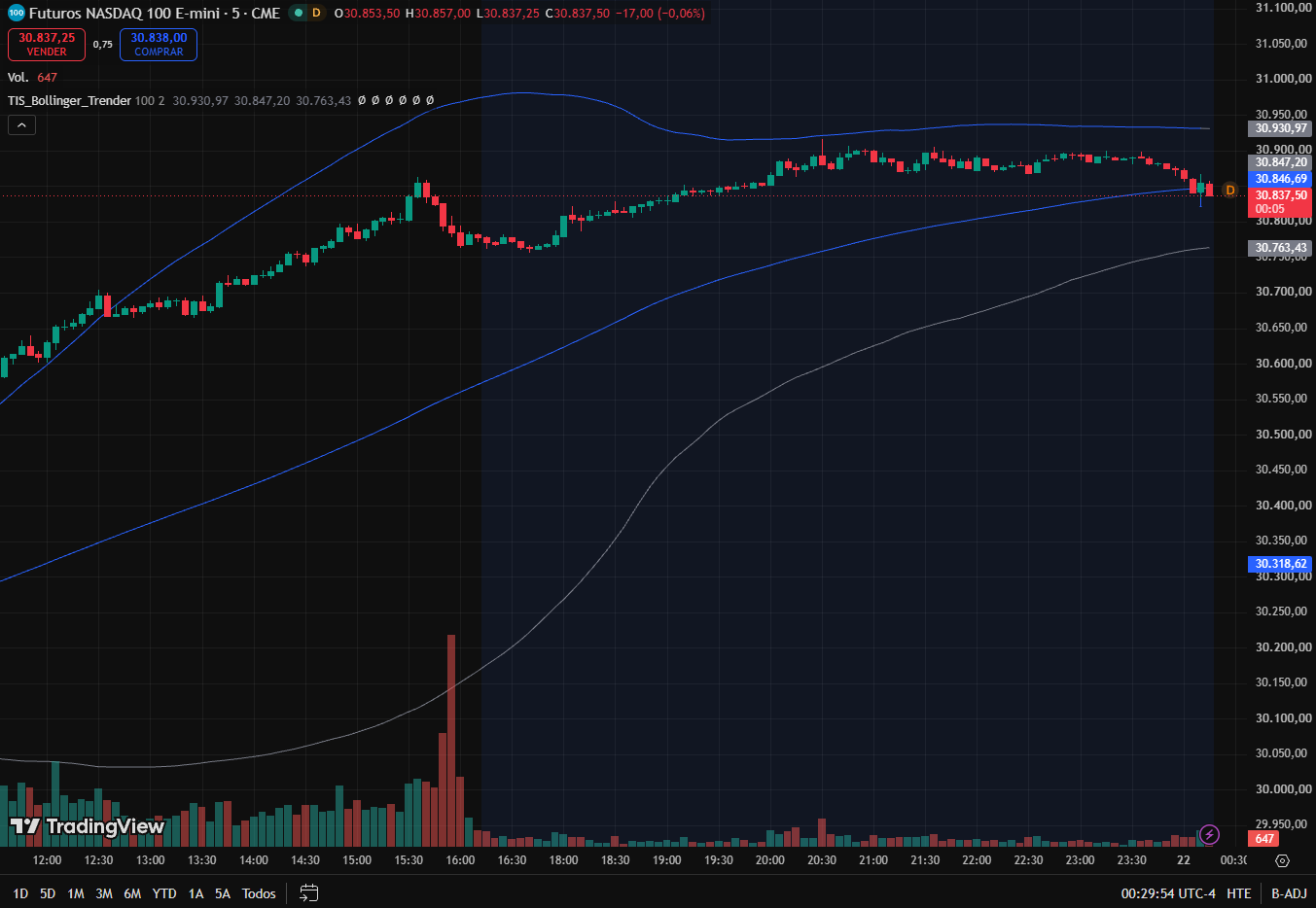
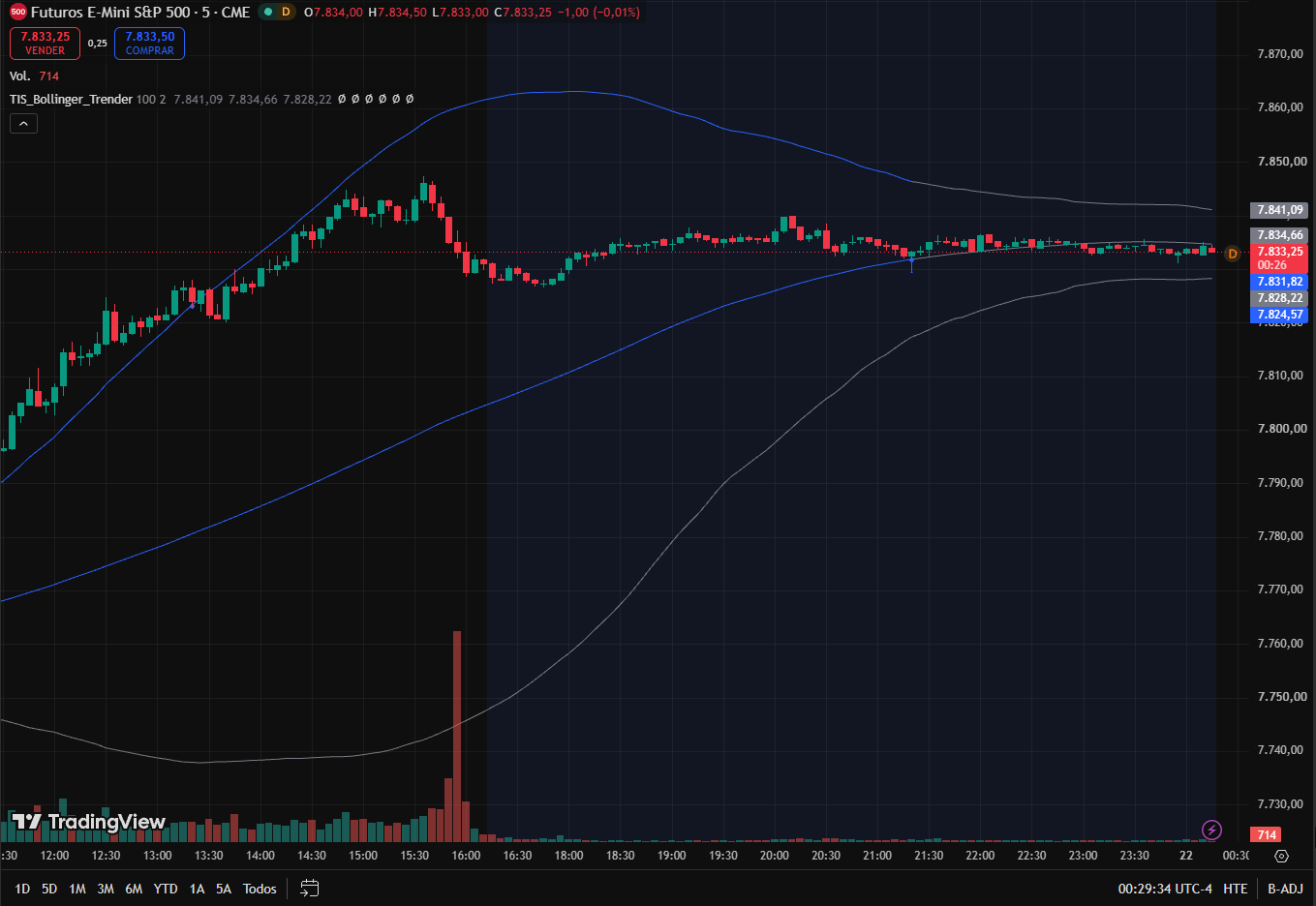
Indicador en Pine Script que convierte las Bandas de Bollinger en una entrada de continuación en dos pasos: un cierre más allá de la banda exterior arma la dirección, y un retroceso que vuelve a cerrar a través de la banda media dispara la entrada. Una señal por ruptura, con alertas y compatible con TIS_Automator.
Pine Script indicator that turns Bollinger Bands into a two step continuation entry: a close beyond the outer band arms the direction, and a pullback that closes back through the middle band triggers the entry. One signal per breakout, alert-ready and compatible with TIS_Automator.
Description
TIS_Bollinger_Trender para TradingView convierte las Bandas de Bollinger en una entrada de dos pasos en lugar de un conjunto de líneas. La banda exterior decide de qué lado estás, y la banda media decide cuándo entrás.
Cómo funciona
La mayoría de los setups con bandas opera contra los extremos: el precio llega a la banda superior y vendés. Este hace lo contrario, y lo hace en dos movimientos. El primero es la ruptura. Cuando una vela cierra más allá de la banda superior, el indicador arma el lado largo y marca la banda donde ocurrió. Eso todavía no te mete en una operación, solo establece la dirección.
El segundo movimiento es el retroceso. Con el lado largo armado, el indicador espera que el precio vuelva, se meta en la banda media y después cierre por encima de ella otra vez. Esa vela es la entrada, queda marcada con una flecha y se publica como salida propia. El estado se limpia enseguida, así que una ruptura produce una sola entrada y después el indicador se queda callado hasta que el precio vuelva a romper una banda. El lado corto es la imagen espejo.
Mientras un lado está armado, las bandas mismas te lo indican. La banda exterior que fue rota y la banda media toman el color de ese lado, y vuelven al gris neutral apenas dispara la entrada o el otro lado toma el control. Así el estado del setup se lee de un vistazo, sin necesidad de un panel aparte.
Todo se evalúa al cierre de la barra. Una vez que la barra cerró, su señal es definitiva y no cambia.
Características principales
▸ Lógica de dos pasos: la banda exterior arma la dirección, la banda media dispara la entrada
▸ Enfoque de continuación en vez de operar contra los extremos
▸ Una entrada por ruptura: el estado se limpia con la señal, así el setup no se repite dentro del mismo movimiento
▸ Bandas coloreadas según el lado armado, así el estado del setup se ve sin un panel separado
▸ Entradas confirmadas por cierre a través de la banda media, no por una mecha que la toca
▸ Ruptura y entrada marcadas como salidas separadas en los dos lados, cuatro en total
▸ Las tres bandas también quedan expuestas, así otros scripts pueden leerlas directamente
▸ Alertas para las dos entradas y las dos rupturas
Parámetros
| Parámetro | Descripción |
|---|---|
| Bollinger_Period | Período de la media móvil y de la desviación estándar. El default de 100 es deliberadamente largo: hace que romper una banda sea un evento más raro y más significativo que con el 20 habitual. |
| Bollinger_StDev | Cantidad de desviaciones estándar de las bandas exteriores. Valores más altos exigen un movimiento más fuerte para armar un lado y producen menos setups. |
¿Para quién es?
Para el trader que quiere sumarse a un movimiento en vez de operarlo en contra, y que prefiere esperar el retroceso antes que perseguir la vela que rompió. La estructura de dos pasos es lo que hace eso practicable: la ruptura queda registrada, así no tenés que acordarte de ella, y la entrada recién aparece cuando el precio efectivamente volvió y aguantó. Sirve igual para swing en temporalidades altas que para continuación intradía en las bajas, porque lo único que cambia es el período.
Listo para automatizar. TIS_Bollinger_Trender es totalmente compatible con nuestro sistema TIS_Automator: seleccionás las salidas de entrada larga y corta como fuentes de señal, definís target y stop, y las entradas en el retroceso se operan de punta a punta sin intervención manual.
TIS_Bollinger_Trender for TradingView turns Bollinger Bands into a two step entry instead of a set of lines. The outer band decides which side you are on, and the middle band decides when you get in.
How It Works
Most band based setups fade the extremes: price reaches the upper band, you sell. This one does the opposite, and it does it in two moves. The first move is the breakout. When a bar closes beyond the upper band, the indicator arms the long side and marks the band where it happened. That does not put you in a trade, it only establishes the direction.
The second move is the pullback. With the long side armed, the indicator waits for price to come back and dig into the middle band, and then close above it again. That bar is the entry, and it is marked with an arrow and published as its own output. The state clears immediately afterwards, so a single breakout produces one entry and then the indicator goes quiet until price breaks a band again. The short side is the mirror image.
While a side is armed, the bands themselves tell you so. The outer band that was broken and the middle band both take the color of that side, and they return to neutral gray the moment the entry fires or the other side takes over. So the state of the setup is readable at a glance without any extra panel.
Everything is evaluated on the bar close. Once a bar has closed, its signal is final and never changes.
Key Features
▸ Two step logic: the outer band arms the direction, the middle band triggers the entry
▸ Continuation approach rather than fading the extremes
▸ One entry per breakout: the state clears on the signal, so the setup never repeats itself into the same move
▸ Bands colored by the armed side, so the state of the setup is visible without a separate panel
▸ Entries confirmed by a close through the middle band, not by a wick touching it
▸ Breakout and entry marked as separate outputs on both sides, four in total
▸ The three bands are also exposed, so other scripts can read them directly
▸ Alert conditions for both entries and both breakouts
Parameters
| Parameter | Description |
|---|---|
| Bollinger_Period | Period of the moving average and of the standard deviation. The default of 100 is deliberately long: it makes a band break a rarer, more meaningful event than the usual 20. |
| Bollinger_StDev | Number of standard deviations for the outer bands. Higher values demand a stronger move before a side is armed and produce fewer setups. |
Who Is It For?
Traders who want to join a move rather than fade it, and who would rather wait for the retracement than chase the bar that broke out. The two step structure is what makes that practical: the breakout is recorded so you do not have to remember it, and the entry only appears once price has actually come back and held. It suits swing work on higher timeframes as easily as intraday continuation on lower ones, since the only thing that changes is the period.
Automation ready. TIS_Bollinger_Trender is fully compatible with our TIS_Automator system: select the long and short entry outputs as signal sources, set your target and stop, and the pullback entries can be traded end to end without manual intervention.
Solo los clientes que hayan comprado este producto pueden dejar una opinión.
Related Products
-
-
Sale
¡Oferta!
-
-
Opiniones
Aún no hay opiniones.